Table of Contents
Driving to Croatia from Western Europe can be an unforgettable experience, especially if you follow a scenic Croatia road trip itinerary that includes historic cities, waterfalls, national parks, and the Adriatic coast.
A Road Trip That Started With a Simple Question
A few years ago, our neighbor in Brussels asked us a simple question:
“Can you suggest where we should go if we drive to Croatia from Belgium? What should we visit on the way?”
It’s the kind of question that sounds simple at first — but once you start thinking about Croatia, it quickly becomes a much bigger conversation. There are so many beautiful places along the way: historic cities, waterfalls, national parks, and coastal towns overlooking the Adriatic Sea.
Instead of sending a short reply, I ended up writing a full itinerary.
As someone who grew up in Croatia and spent countless summers traveling along the coast and through its national parks, it was surprisingly easy to keep adding places to that list.
Driving to Croatia from Western Europe is actually one of the most enjoyable ways to experience the country. As you travel through Austria and Slovenia, the landscape slowly changes — from Alpine scenery to green valleys and forests, and eventually to the deep blue Adriatic coast.
This is the route I suggested to my neighbor, and it remains one of my favorite ways to explore Croatia.
Driving to Croatia from Western Europe
If you are traveling by car from Belgium, Germany, the Netherlands, or France, one of the easiest routes to Croatia goes through Austria and Slovenia.
The route we usually recommend is:
Western Europe → Austria (Graz) → Slovenia (Maribor) → Zagreb.
This route is efficient and scenic, especially as you approach Slovenia and northern Croatia. Highways are excellent, and the journey gradually shifts from Alpine landscapes to the rolling hills of Croatia.
Your first real Croatian stop should be Zagreb, the capital city.
First Stop: Exploring Zagreb
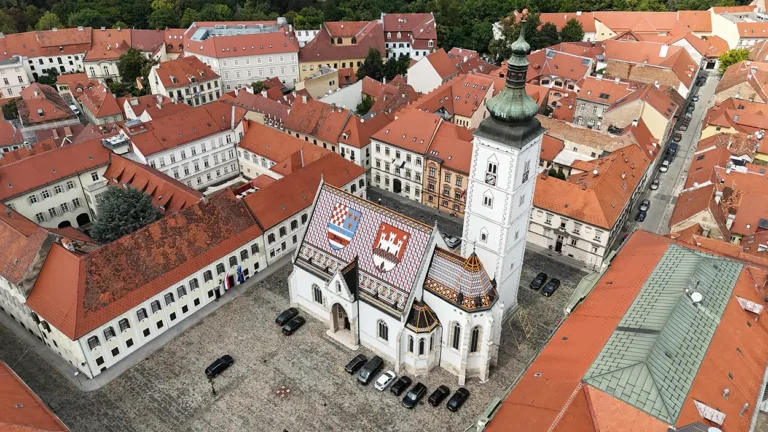
Zagreb is often overlooked by travelers rushing toward the coast, but it is a wonderful city to explore for a few days.
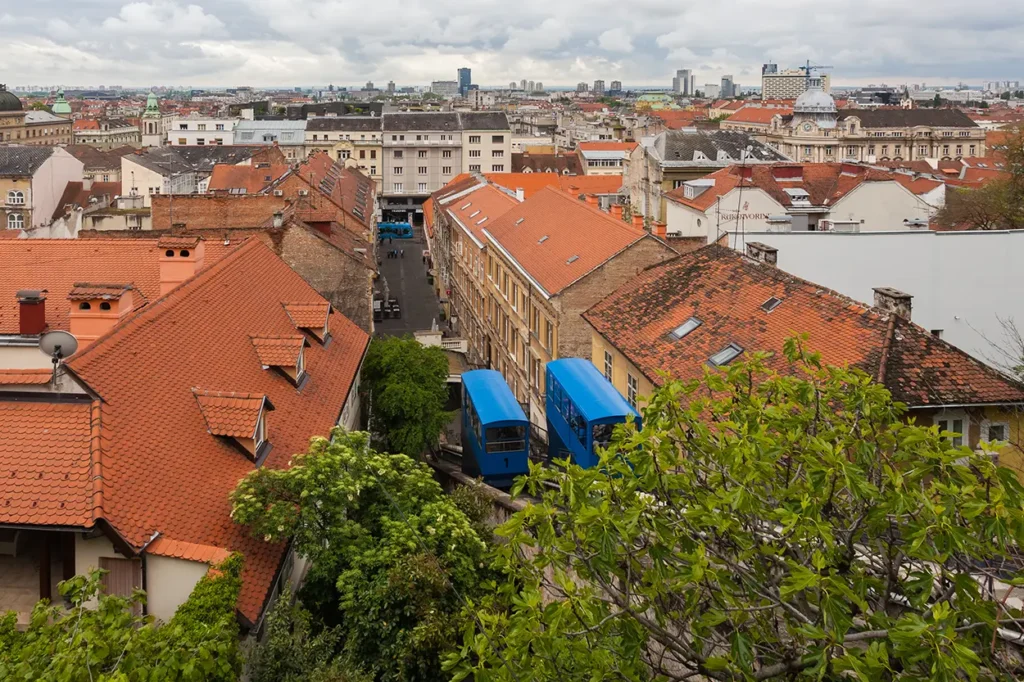
The historic center is divided into Upper Town and Lower Town, connected by one of the shortest funicular railways in the world. Walking through the cobbled streets of Upper Town feels like stepping back in time. The Zagreb Cathedral towers above the city and nearby squares are filled with cafés, museums, and small galleries.
If you enjoy history and stories, you can also join evening walking tours where guides share the myths and legends of the old city.
Just above Zagreb rises Medvednica Mountain, a favorite weekend escape for locals. At the top you’ll find Medvedgrad, an old medieval fortress with beautiful views over the entire city.
Many visitors also take the Sljeme cable car up the mountain for hiking, forest walks, and traditional mountain restaurants.
Rastoke: A Hidden Village of Waterfalls

When leaving Zagreb toward Plitvice Lakes, I always recommend driving along the older road through Karlovac.
If you have time, stop briefly in Karlovac. The city is unique because it sits on four rivers and was built as a star-shaped fortress in the 16th century.
A little further south lies one of Croatia’s most charming hidden places: Rastoke.
Rastoke is a small village built on waterfalls where the Slunjčica River flows into the Korana River. Old wooden watermills are still standing above the cascades, and the entire village feels almost like something from a fairy tale.
It’s one of those places where visitors stop for an hour and end up staying much longer.
Continuing Toward the Adriatic Coast
From Plitvice the road gradually descends toward the Adriatic coast.
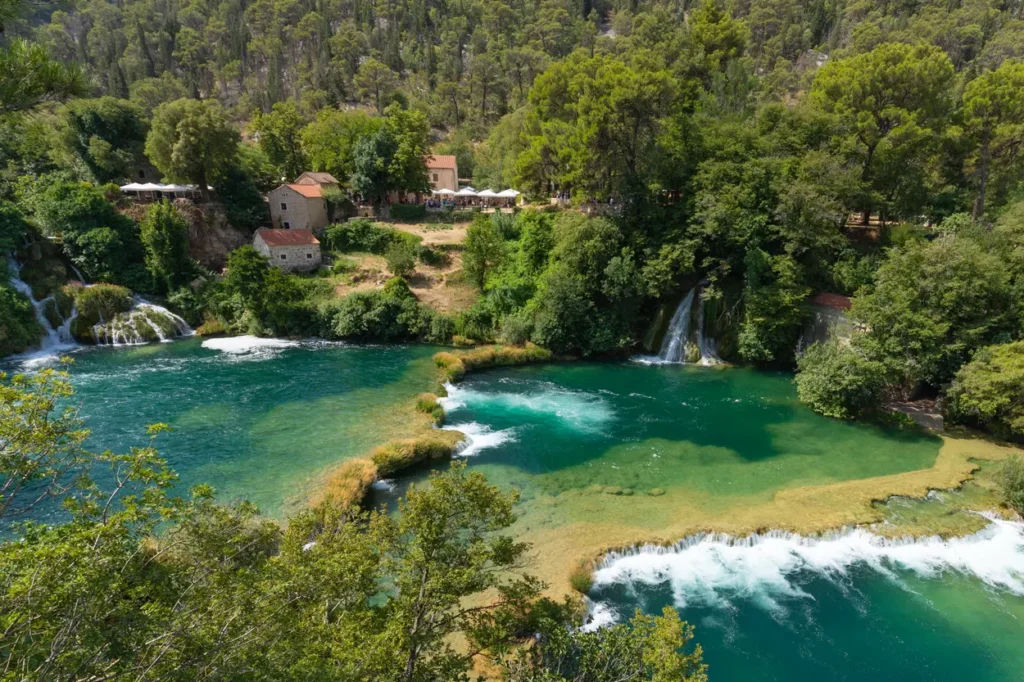
Before reaching the sea, many travelers stop at Krka National Park, another spectacular park famous for its waterfalls and lush greenery. Unlike Plitvice, the Krka River flows through deep canyons and historic sites, including the peaceful island monastery of Visovac.
A short drive from Krka brings you to Šibenik, a beautiful coastal town and a great starting point for exploring nearby islands.
Šibenik and the Gateway to the Islands
Šibenik is one of my favorite coastal towns in Croatia. Its stone streets climb up the hill toward the impressive Cathedral of St. James, a UNESCO World Heritage site built entirely from stone.
From Šibenik, travelers can take boat trips to nearby islands or even explore the famous Kornati archipelago, a stunning group of rocky islands scattered across the Adriatic Sea.
From here your road trip can continue either north or south along the Adriatic coastal road.
Driving the Adriatic Coastal Road
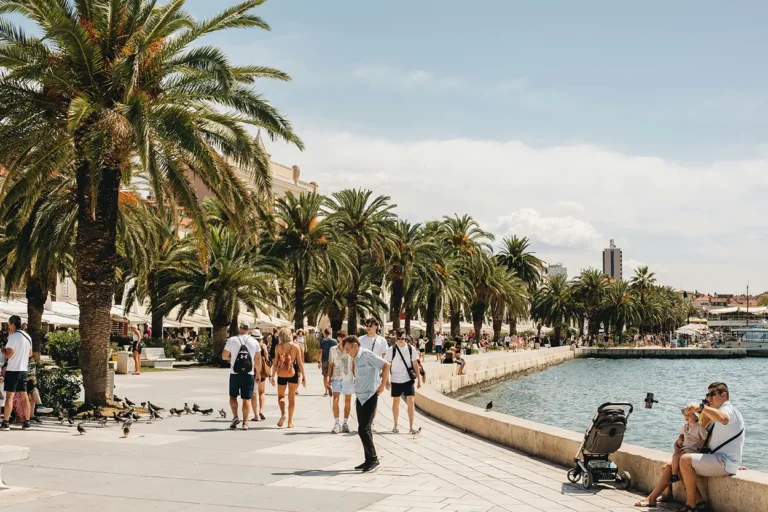
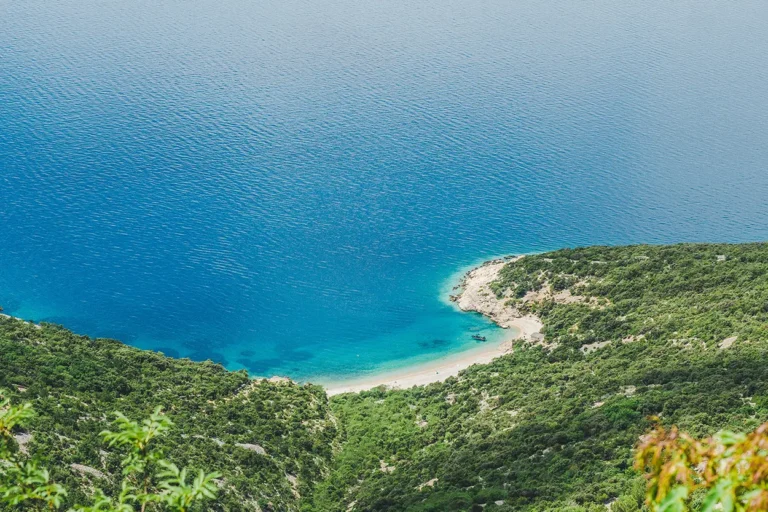
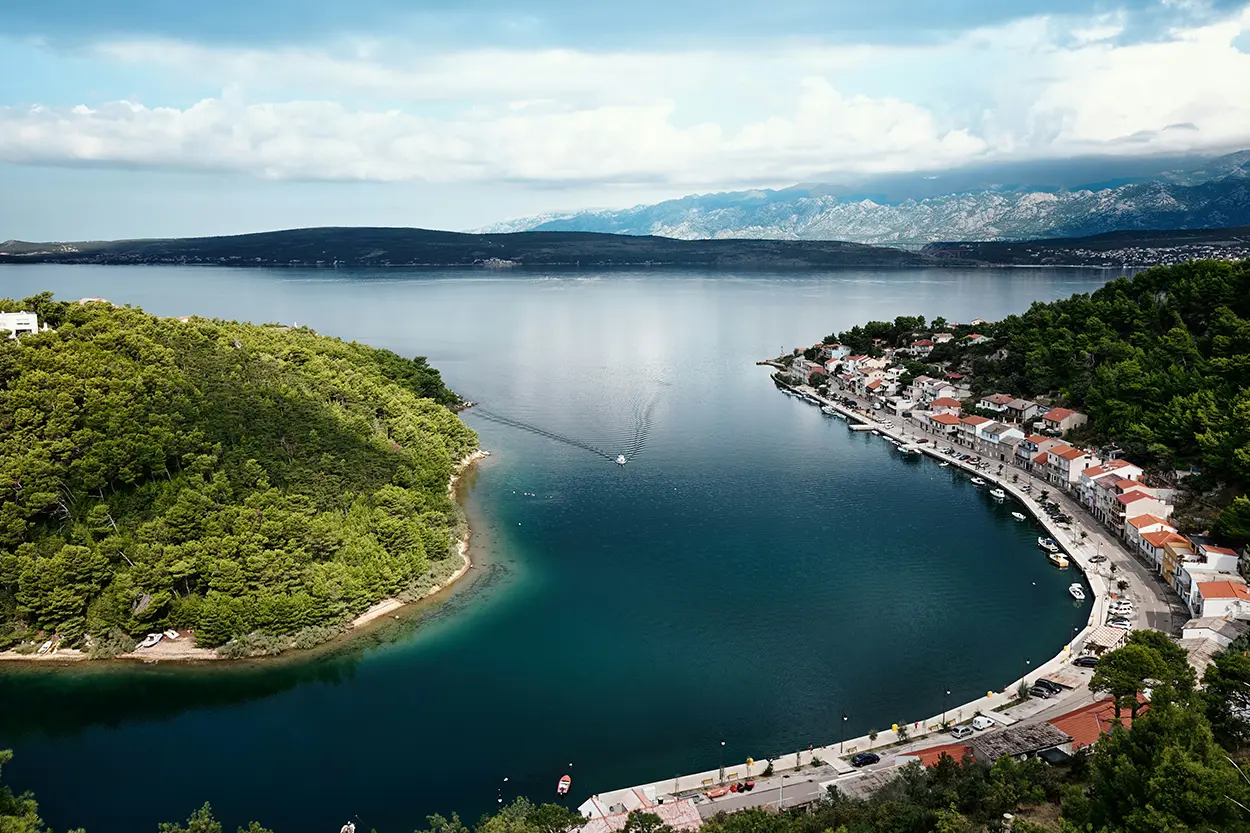
The coastal road in Croatia is one of the most beautiful drives in Europe. It follows the shoreline with endless views of the Adriatic Sea and nearby islands.
If you decide to drive north, you can stop in several historic coastal cities:
Zadar – famous for the Sea Organ and spectacular sunsets.
Rijeka – Croatia’s largest port city with vibrant cultural life.
Opatija – an elegant seaside resort known since the Austro-Hungarian era.
Pula – home to one of the best-preserved Roman amphitheaters in the world.
Rovinj – a stunning old town rising above the sea.
Poreč, Novigrad, and Umag – charming coastal towns in the region of Istria.
This part of the coast offers a mix of history, beaches, and Mediterranean atmosphere.
The Hilltop Towns of Istria
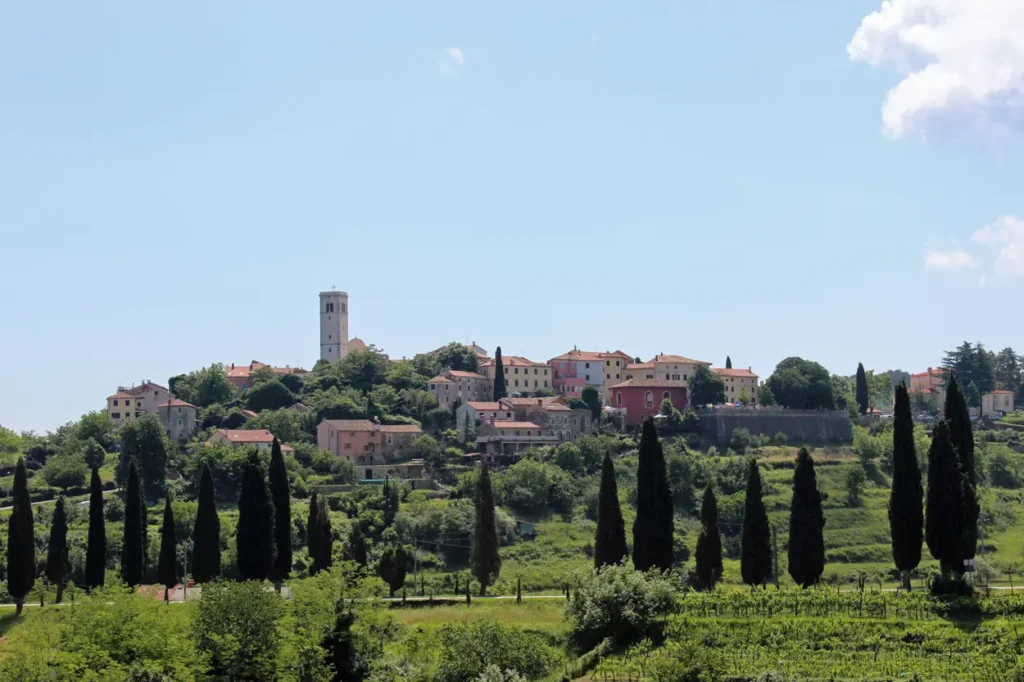
If you continue inland from the coast of Istria, you will discover some of Croatia’s most beautiful hilltop villages.
Among my favorites are:
Grožnjan – an artistic village full of galleries and music.
Oprtalj – a quiet medieval town with incredible views.
Motovun – famous for truffles and surrounded by vineyards.
Pazin – known for its dramatic castle and deep karst cave.
This region combines medieval history with wonderful food, wine, and olive oil.
The Green Heart of Croatia: Risnjak and Gorski Kotar
From Istria you can also head toward the lush forests of Gorski Kotar, one of Croatia’s most underrated regions.
Here you’ll find Risnjak National Park, named after the lynx that inhabits the forests.
Nearby places like Skrad and Zeleni Vir offer beautiful natural landscapes with waterfalls, canyons, and deep green forests. Small mountain villages such as Mrkopalj, Lokve, and Fužine provide a completely different atmosphere from the sunny coast.
This region feels calm, wild, and wonderfully peaceful.
If You Return Through Zagreb: Visit Samobor

If your route takes you back through Zagreb on the way home, make sure to stop in Samobor.
Samobor is a charming small town just outside the capital and one of the favorite weekend destinations for people from Zagreb. The main square is filled with cafés and bakeries, and the town is famous for its delicious kremšnita cream cake.
It’s the perfect place to end a Croatian road trip.
Eastern Croatia: A Different Side of the Country
If you have more time and want to explore another side of Croatia, consider heading east toward Slavonia.
Cities like Osijek offer beautiful architecture, river promenades, and a relaxed atmosphere. Nearby you can visit the wine regions of Beli Manastir, Kneževi Vinogradi, and Ilok, or explore the wildlife of Kopački Rit Nature Park, one of Europe’s largest wetlands.
This region shows a completely different face of Croatia — calm, rural, and rich in tradition.
A Road Trip You Will Never Forget
This itinerary is only a small glimpse of what Croatia offers.
From waterfalls and national parks to historic coastal towns and quiet forest regions, the country is incredibly diverse for such a small place on the map.
And that is exactly why I told my neighbor the same thing I tell many travelers today:
You will probably not see everything on your first visit — but that simply means you will have a good reason to come back.
Croatia may look small on the map, but once you start exploring it by road, you quickly realize how many landscapes, cultures, and hidden places it contains.
Frequently Asked Questions About Driving to Croatia
Is driving to Croatia from Western Europe easy?
Yes, driving to Croatia from Western Europe is relatively easy thanks to excellent highways through Germany, Austria, and Slovenia. Many travelers choose this route because it allows them to stop in cities and national parks along the way.
How long does it take to drive to Croatia from Belgium or Germany?
Driving from Belgium to Zagreb usually takes around 12–14 hours, depending on traffic and stops. Many travelers split the journey with an overnight stay in Austria or Slovenia.
Is a car useful for exploring Croatia?
Yes. While cities are walkable, having a car allows you to explore national parks, small towns, and scenic coastal roads that are difficult to reach by public transport.
Some of the stunning photography featured in this article is sourced from the talented contributors on Unsplash – a platform for freely usable visuals that capture Croatia’s magic perfectly.