Croatia is a paradise for history lovers. From Roman amphitheaters and medieval fortresses to ancient traditions and UNESCO towns, historical and cultural tours in Croatia reveal the country’s rich heritage. In this guide, I share some of my favorite cities, islands, and cultural experiences that bring Croatia’s fascinating past to life.
Table of Contents
Historical and Cultural Tours in Croatia
Croatia may be famous for its turquoise Adriatic Sea and sun-drenched islands, but what truly makes this country special is its history, which you can explore across many beautiful regions. Wherever you go, the past quietly surrounds you. Roman emperors once ruled here, medieval traders built powerful city-states along the coast, and centuries-old traditions are still celebrated in town squares today.
For travelers who love history, architecture, and authentic culture, historical and cultural tours in Croatia offer one of the most fascinating journeys in Europe.
What I love most about Croatia is how naturally the past blends with everyday life. You might start your morning walking through a 1,700-year-old Roman palace, enjoy coffee in a Renaissance square at noon, and watch a traditional folk performance in the evening.
And the best part? Croatia’s historical and cultural treasures can be explored all year round.
Ancient Wonders: Roman Heritage in Croatia
Croatia’s connection with ancient Rome runs deep, and some of the most impressive Roman monuments in Europe can still be seen here today.
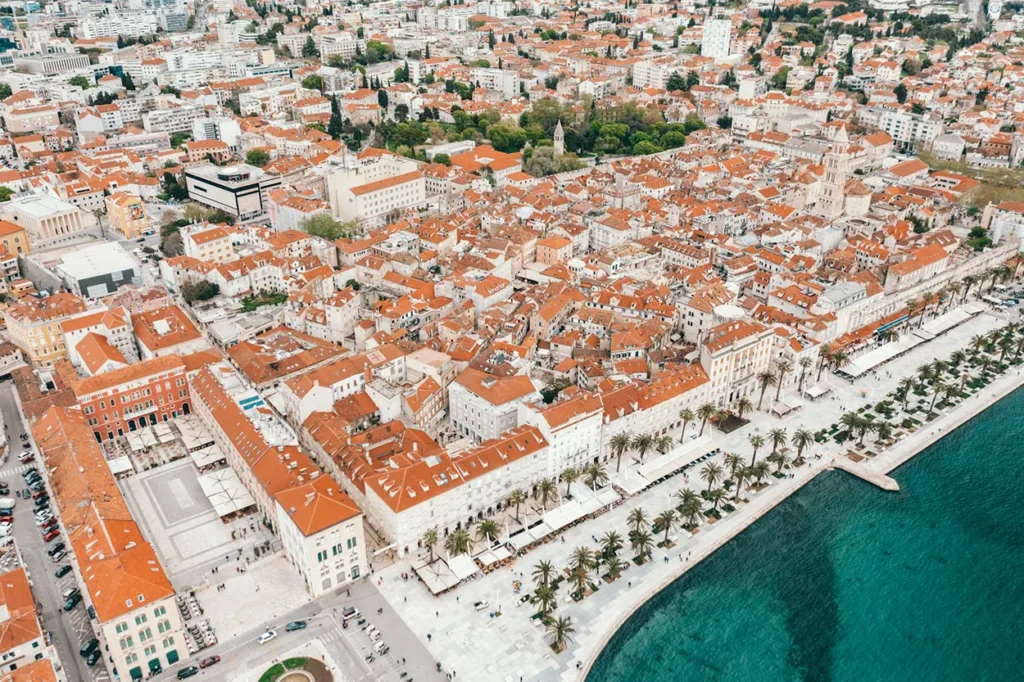
One of the most remarkable places is Split, where the entire historic center grew inside the walls of Diocletian’s Palace, built in the 4th century for the Roman emperor Diocletian — the city I always recommend when sharing my favorite travel tips for Croatia.
Today, the palace is not a museum — it is a living city. People live in its stone houses, restaurants operate inside ancient halls, and narrow marble streets echo with footsteps from both locals and travelers.
Walking through the palace feels like stepping directly into the Roman Empire.
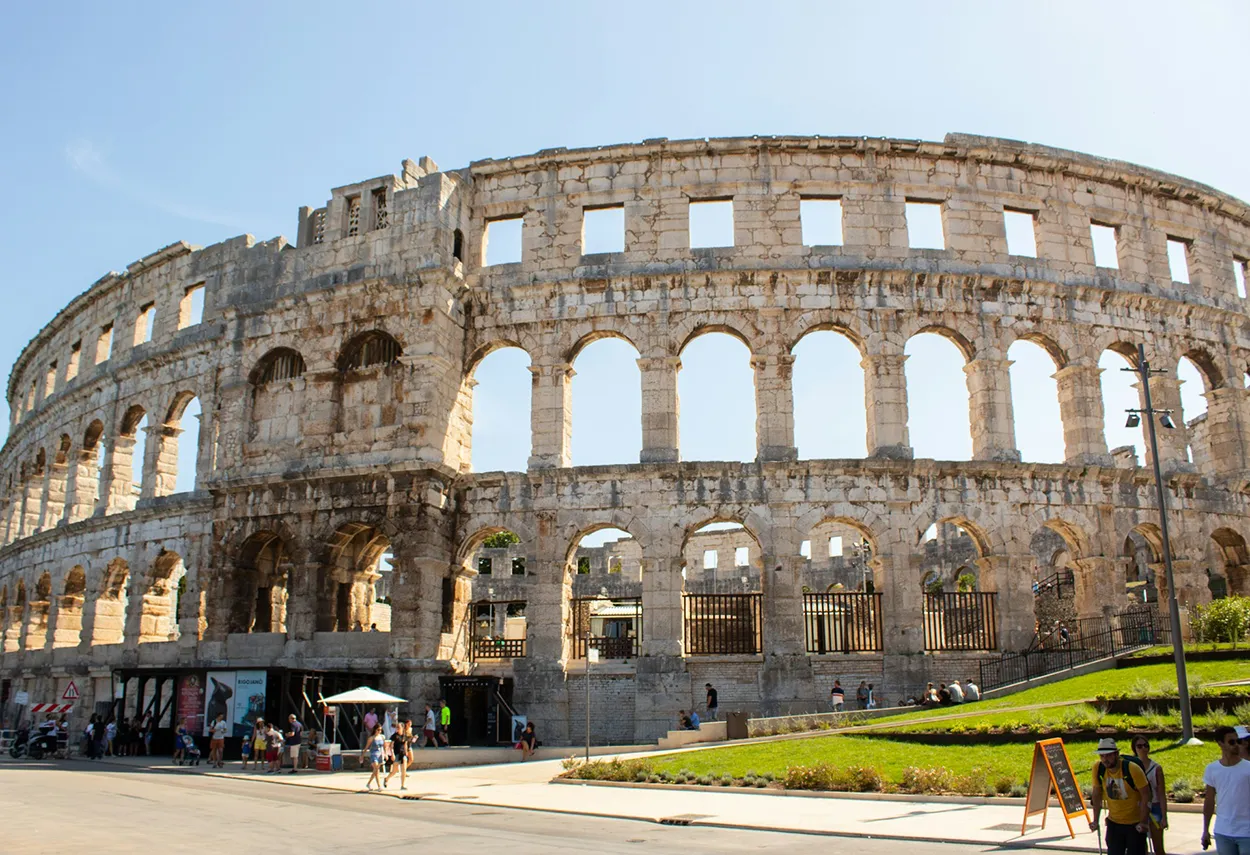
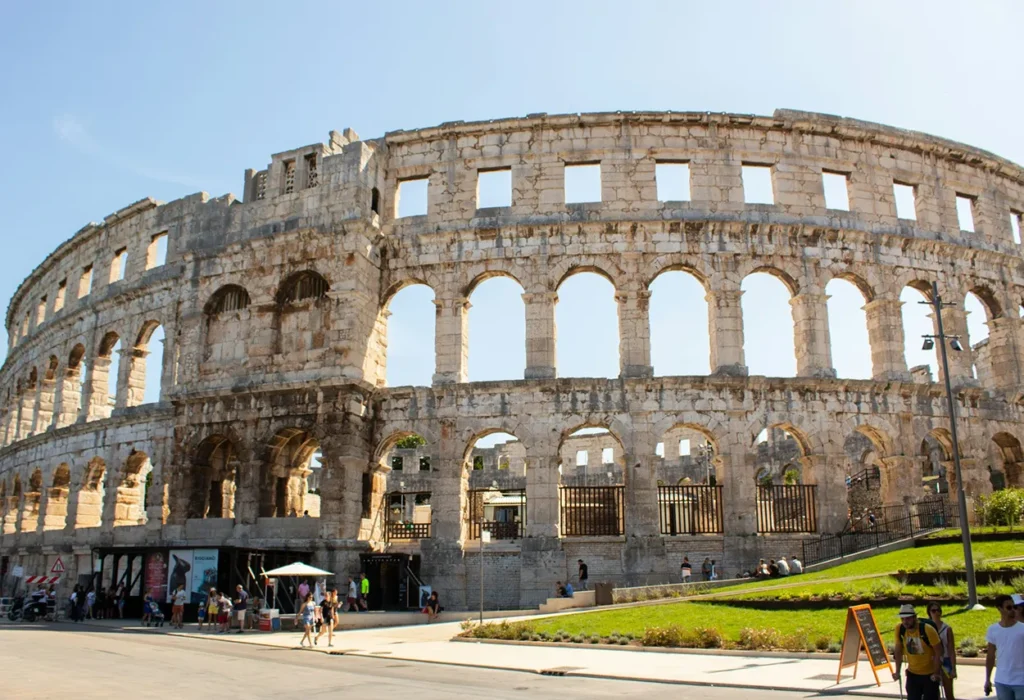
Another extraordinary site is Pula, located on the Istrian Peninsula. Here you will find one of the best-preserved Roman amphitheaters in the world. Built in the 1st century, the Pula Arena once hosted gladiator battles for thousands of spectators.
Today, the amphitheater has taken on a new role. Instead of gladiators, it hosts film festivals, concerts, and cultural events — proving that Croatia’s ancient monuments are still part of modern life.
Medieval Marvels: Fortresses, Walls, and Stone Cities
While Roman ruins mark Croatia’s ancient past, the medieval period shaped many of the country’s most iconic towns.
Few places capture this history better than Dubrovnik, often called the “Pearl of the Adriatic.” Its impressive city walls, built between the 13th and 16th centuries, stretch almost two kilometers around the old town. Walking along these walls offers breathtaking views of red rooftops, ancient towers, and the endless blue Adriatic Sea.
The city became even more famous after appearing in the television series Game of Thrones, but its real story is far older. For centuries Dubrovnik was a powerful maritime republic and one of the most important trading cities in the Mediterranean.
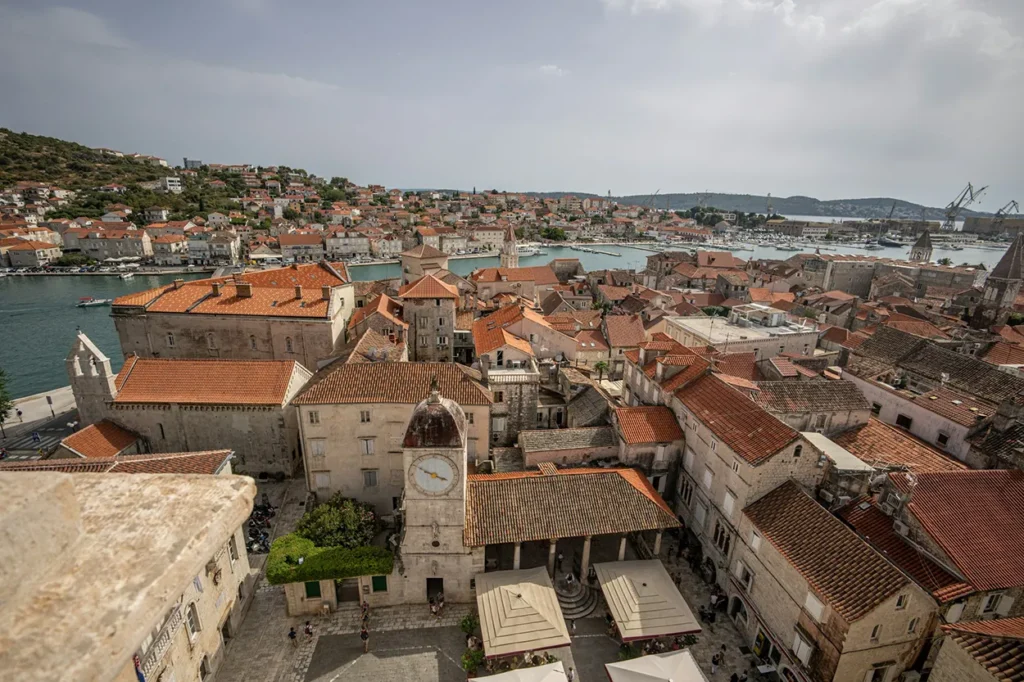
Another jewel of medieval architecture is Trogir, a UNESCO World Heritage town that feels like an open-air museum. Its narrow streets reveal Gothic, Romanesque, and Renaissance buildings at every corner. The Cathedral of St. Lawrence, with its beautifully carved Radovan Portal, is considered one of the most remarkable medieval sculptures in Croatia.
In towns like these, history is not something behind glass — it is something you walk through.
Sacred Landmarks: Croatia’s Spiritual Heritage
Religion also played a major role in shaping Croatia’s cultural landscape, leaving behind extraordinary churches, monasteries, and cathedrals.
One of the most impressive examples is the Cathedral of St. James in Šibenik, another UNESCO World Heritage site. Built entirely from stone between the 15th and 16th centuries, the cathedral is a masterpiece of Renaissance architecture and engineering.
Unlike most cathedrals of its time, it was constructed without bricks or wooden supports, using only precisely carved stone blocks that fit together perfectly.
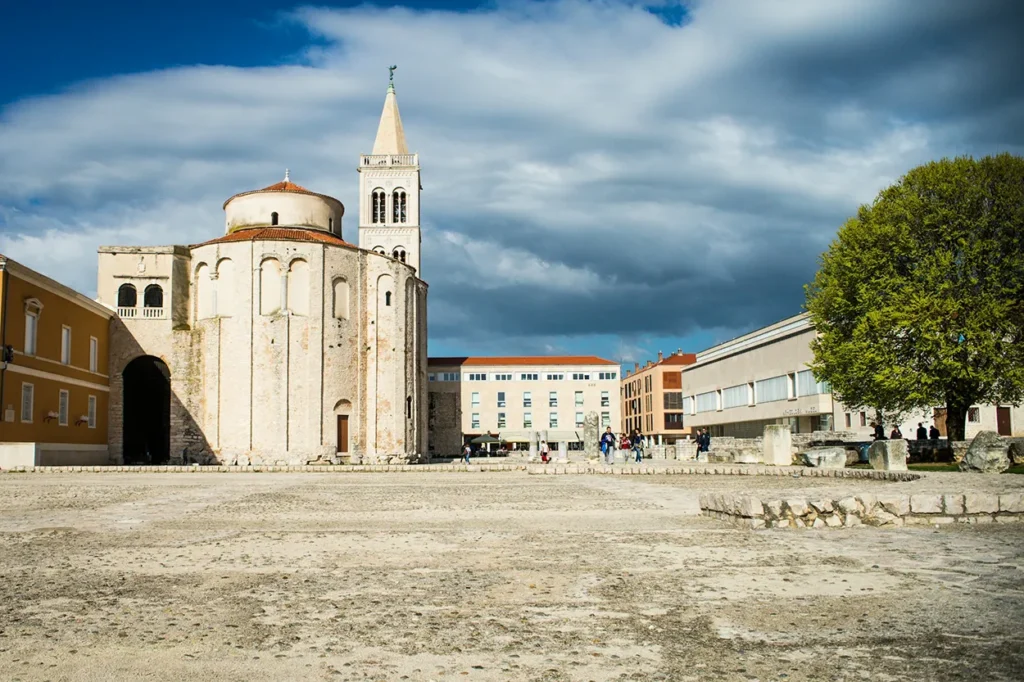
Further north along the coast lies Zadar, a city where ancient heritage meets modern creativity. One of its most fascinating landmarks is the Church of St. Donatus, a circular 9th-century church built using stones from the Roman forum nearby.
Just steps away, the modern Sea Organ creates haunting music powered by the movement of the waves — a perfect example of how Croatia’s past and present continue to intertwine.
Island Heritage: History Across the Adriatic
Croatia’s islands are often associated with beaches and sailing, but they also hold remarkable cultural stories that travelers often discover while island hopping along the Adriatic coast.
The island of Hvar is known for its lively atmosphere today, yet it also holds an impressive historical record. The town of Hvar contains one of the oldest public theaters in Europe, built in 1612.
Nearby Korčula is often linked with the legendary explorer Marco Polo, who many believe was born here. The island’s fortified old town is one of the best-preserved medieval settlements in the Adriatic, with defensive walls, narrow alleys, and elegant stone houses overlooking the sea.
Exploring Croatia’s islands reveals how maritime life, trade, and cultural exchange shaped the Adriatic for centuries.
Living Traditions: Culture That Still Thrives
History in Croatia is not only found in monuments — it is also alive in traditions that continue today.
One of the most famous cultural events is the Sinjska Alka, a knightly tournament held every year in the town of Sinj. The tradition dates back to 1715 and commemorates the victory over Ottoman forces. Riders in traditional costumes race on horseback, attempting to strike a small metal ring with a lance while galloping at full speed.
On the island of Korčula, visitors can witness the Moreška sword dance, a dramatic performance that recreates historic battles using choreographed sword fighting and traditional music.
Even Croatian cuisine tells a historical story, and exploring local dishes is an essential part of many food and wine adventures in Croatia. Many dishes reflect influences from Roman, Venetian, Ottoman, and Austro-Hungarian cultures.
Slow-cooked pašticada, seafood stews along the coast, and dishes prepared under a traditional iron bell called peka all carry centuries of culinary heritage.
In Croatia, history is not just preserved — it is lived.
Historical and Cultural Tours in Croatia All Year Round
Another wonderful aspect of historical and cultural tours in Croatia is that they are not limited to the summer season.
In fact, exploring Croatia’s historic cities during spring, autumn, or winter can be even more enjoyable. With fewer crowds, you can walk through ancient streets, museums, and castles at a slower pace.
Winter brings festive Christmas markets to cities like Zagreb, while warmer months are ideal for exploring historic towns and enjoying outdoor adventures in Croatia.
Every season offers a different way to experience Croatia’s rich cultural heritage.
Discover Croatia Through History
Croatia is often described as a Mediterranean paradise, but it is also a country where more than two thousand years of history remain beautifully preserved.
From Roman arenas and medieval walls to island traditions and cultural festivals, historical and cultural tours in Croatia reveal stories that shaped not only the country but much of Europe.
For travelers who enjoy exploring places with deep roots and fascinating stories, Croatia offers an unforgettable journey through time.
And once you begin exploring its cities, islands, and traditions, you quickly realize that Croatia is not just a destination — it is a living history waiting to be discovered.
FAQ: Historical and Cultural Tours in Croatia
What are the best historical places to visit in Croatia?
Some of the most famous historical sites in Croatia include Diocletian’s Palace in Split, the Roman Arena in Pula, Dubrovnik’s city walls, and the medieval town of Trogir.
Are historical tours in Croatia available all year?
Yes. Croatia’s historical cities, museums, and cultural landmarks can be explored throughout the year, and visiting outside the summer season often means fewer crowds.
Which Croatian city has the most historical monuments?
Split, Dubrovnik, Pula, and Trogir are among the cities with the richest historical heritage in Croatia.
Some of the stunning photography featured in this article is sourced from the talented contributors on Unsplash – a platform for freely usable visuals that capture Croatia’s magic perfectly.